Rapamycin · mechanism
How rapamycin works and the mTOR pathway explained
To understand rapamycin, you only really need to understand one pathway: mTOR. Get that, and the whole longevity story clicks into place.
Rapamycin is often described as an "mTOR inhibitor," which is accurate but not very illuminating on its own. This page unpacks what that phrase means, step by step. If you want the origin story and approvals first, start with what rapamycin is.
What is mTOR?
mTOR (mechanistic target of rapamycin) is a protein complex that acts as a central hub sensing nutrients, energy and growth signals. When those inputs are abundant, mTOR drives cells to grow, divide and build; when they are scarce, it powers down and cells conserve. It is one of the most important growth-regulating pathways in biology, tied to metabolism and disease.[1]
How does rapamycin switch it off?
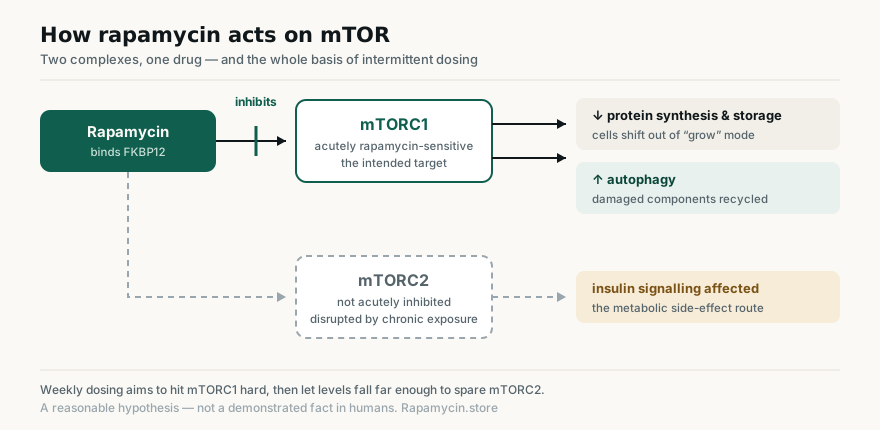
Rapamycin does not attack mTOR directly. It first binds a small partner protein, and that complex then inhibits mTORC1, one of the two main forms of mTOR. The result is that the "grow and store" instruction is turned down.[1] The second complex, mTORC2, is generally less sensitive, which is one reason dose and schedule change the drug's overall effect.
What does the cell do instead?
With growth signalling reduced, cells lean toward maintenance — and one of the most important maintenance programs is autophagy, the process of breaking down and recycling worn-out or damaged components. Because mTORC1 normally suppresses autophagy, inhibiting it tends to release that brake, letting cells clean house.[2] If you want to go deeper on that clean-up process, see autophagy and fasting.
Why does this matter for ageing?
Persistently high growth signalling and sluggish cellular clean-up show up as features of ageing across many organisms. The idea is that shifting cells away from relentless growth toward repair could slow some of that damage — which is precisely why mTOR inhibition sits at the center of rapamycin's longevity case.[3]
Mechanism clear · human lifespan effect unprovenAn important limit
A clear mechanism is not the same as a proven benefit. We understand fairly well how rapamycin acts on mTOR; we are far less certain that nudging this pathway meaningfully slows ageing in healthy humans. The mechanism explains the interest — it does not settle the outcome. For how that translates into evidence and practice, return to the main rapamycin guide or browse the wider Rapamycin.store library.
Frequently asked questions
What is mTOR in simple terms?
mTOR (mechanistic target of rapamycin) is a protein complex that acts as a master switch for cell growth. When nutrients and growth signals are plentiful, mTOR tells cells to grow, divide and store resources; when they are scarce, it quiets down and cells shift toward maintenance.
How does rapamycin inhibit mTOR?
Rapamycin binds a small partner protein and together they block mTORC1, one of the two main mTOR complexes. This turns down the 'grow and store' signal and lets cells lean toward repair and recycling instead.
What is autophagy and how is it related?
Autophagy is the cell's self-cleaning process, where it breaks down and recycles damaged components. Because mTORC1 normally suppresses autophagy, inhibiting mTOR with rapamycin tends to release the brakes on it.
Why does inhibiting mTOR matter for ageing?
Overactive growth signalling and poor cellular clean-up are features of ageing in many organisms. Shifting cells from constant growth toward repair is the leading mechanistic reason researchers think mTOR inhibition could slow aspects of ageing — though this is far better established in animals than in humans.
Does rapamycin block all of mTOR?
Not evenly. It acts most directly on mTORC1; the second complex, mTORC2, is generally less sensitive, though prolonged exposure can affect it too. This difference is part of why dose and schedule change rapamycin's effects.
References
- mTOR Signaling in Growth, Metabolism, and Disease. Saxton RA, Sabatini DM. Cell 2017;168(6):960–976.
- Autophagy fights disease through cellular self-digestion. Mizushima N et al. Nature 2008;451:1069–1075.
- Rapamycin for longevity: the pros, the cons, and future perspectives. Roark KM, Iffland PH. Frontiers in Aging 2025;6:1628187.Peer-reviewed review, cited 31 times.
Own a longevity or health brand?
Rapamycin.store publishes sponsored and guest posts on an aged, topically-relevant domain, and offers display advertising. Tell us what you want to promote and we'll send our current options.