Rapamycin basics
What is rapamycin a plain-language guide
Rapamycin is a real, approved medicine with a strange origin story and a big longevity reputation. Here is what it actually is, without the hype.
Rapamycin comes up constantly in longevity conversations, often with more excitement than explanation. This primer keeps it simple: what the molecule is, where it came from, what it is actually approved to do, and why researchers keep studying it. For the deeper evidence picture, see our main rapamycin evidence guide.
What is rapamycin, in one sentence?
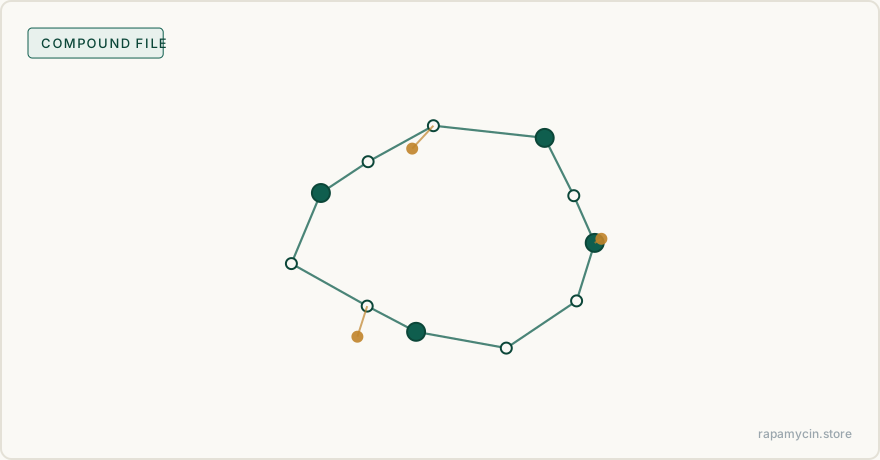
Rapamycin is a macrolide — a large, ring-shaped molecule — produced by the soil bacterium Streptomyces hygroscopicus. In medicine it goes by the generic name sirolimus. It was first isolated in 1975, and for years it was studied mainly as an antifungal and immune-modulating agent before its cell-biology effects took center stage.
Where does the unusual name come from?
The name traces to Rapa Nui, the Polynesian name for Easter Island. The soil sample that yielded the bacterium was collected there, and researchers combined "Rapa Nui" with the "-mycin" suffix used for bacterial products.[1] So the compound is, quite literally, named after the remote island where it was discovered.
What is rapamycin approved to treat?
As sirolimus, rapamycin is an approved prescription medicine, not a supplement. Its established uses include preventing rejection after organ transplantation, coating coronary stents to keep treated arteries open, and treating a rare lung disease called lymphangioleiomyomatosis (LAM).[2] The National Cancer Institute describes it as a drug that suppresses the immune system and has been investigated in cancer as well.[3]
How does it work, briefly?
Rapamycin's defining action is that it inhibits mTOR (mechanistic target of rapamycin), a master switch that tells cells to grow and store resources. Dialing mTOR down nudges cells toward maintenance and recycling instead. That mechanism is the whole reason the drug matters for ageing, and it is worth understanding on its own — we walk through it in how rapamycin works and the mTOR pathway.
Why do longevity researchers care?
The interest rests on one robust, repeatedly confirmed finding: rapamycin extends lifespan in mice, even when it is started in mid-life.[4] That result put rapamycin at the front of the ageing field. The honest caveat is equally important — mice are not people, and a strong rodent result does not guarantee a human benefit.
Strong in mice · unproven in humansCan I just buy it?
No. Rapamycin is prescription-only, so there is no legitimate over-the-counter version. People who use it off-label for longevity do so through a licensed physician or a regulated telehealth clinic. If this topic interests you, the sensible next steps are learning the mechanism and the risks — not hunting for a checkout page. The wider Rapamycin.store longevity library is built to help with exactly that.
Frequently asked questions
Is rapamycin the same as sirolimus?
Yes. Sirolimus is the generic pharmaceutical name for rapamycin. The two words refer to the same molecule; 'rapamycin' is the older discovery name and 'sirolimus' is the name used on prescriptions and drug labels.
Is rapamycin natural or synthetic?
It is natural in origin. Rapamycin is made by a soil bacterium, Streptomyces hygroscopicus, and was first isolated from a sample collected on Easter Island. The versions used in medicine are manufactured to pharmaceutical standards, but the core molecule comes from bacteria.
What is rapamycin used for?
As sirolimus, it is approved to prevent organ-transplant rejection, to coat coronary stents, and to treat a rare lung disease called lymphangioleiomyomatosis (LAM). Its use for longevity is off-label and experimental, not an approved indication.
Can you buy rapamycin over the counter?
No. Rapamycin is a prescription-only medicine. It is not a supplement and is not sold over the counter. The only appropriate route is a licensed clinician or regulated telehealth provider.
Does rapamycin extend human lifespan?
That has not been shown. Rapamycin reliably extends lifespan in mice, but there is no proof yet that it makes people live longer. Human trials so far mostly show that low intermittent doses are tolerable.
References
- What is the clinical evidence to support off-label rapamycin therapy in healthy adults?. Hands SL, Lustgarten MS, Frame AA, Rosen CJ. Aging (Albany NY) 2025.
- Sirolimus. Wikipedia.
- Definition of rapamycin. NCI Dictionary of Cancer Terms (cancer.gov).
- Rapamycin fed late in life extends lifespan in genetically heterogeneous mice. Harrison DE et al. Nature 2009;460:392–395.9–14% mouse lifespan extension started mid-life.
Own a longevity or health brand?
Rapamycin.store publishes sponsored and guest posts on an aged, topically-relevant domain, and offers display advertising. Tell us what you want to promote and we'll send our current options.