About
About Rapamycin.store
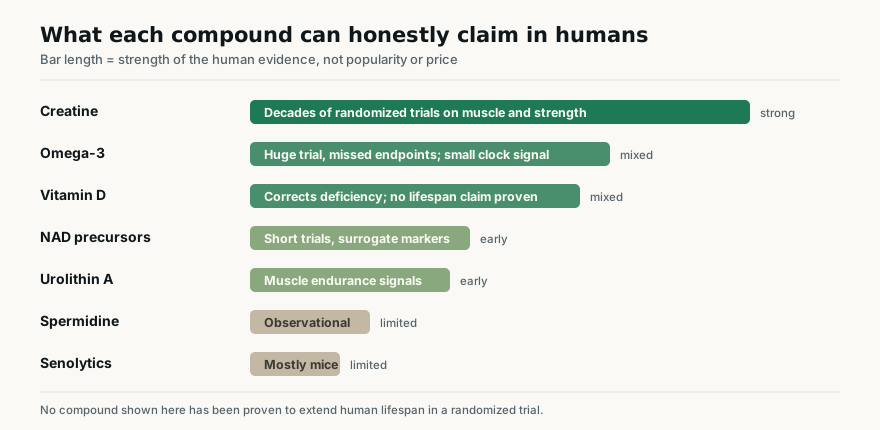
An independent, evidence-first longevity publisher. Only 3 of the 17 compounds we grade (18%) carry strong human evidence, and we say so on every page rather than rounding up.

What this site is for
The longevity space is loud, which is why every guide in the longevity science archive carries its date. Well-designed human trials are outnumbered by pages selling a supplement on the strength of a mouse study, or of a study that doesn't exist.
We built this site to do the opposite. It explains what the research shows about rapamycin, the flagship compound and the wider longevity toolkit in plain language, and it is honest about the gap between "promising in mice" and "proven in people."
How we work
- Per-claim citations. Health claims link to primary literature (PubMed / DOI) or a reputable secondary source. No claim floats free.
- Honest comparisons. Our product roundups rank by strength of human evidence, tell you who each option is not for, and disclose conflicts of interest in the underlying research.
- No prescription sales. Rapamycin, metformin and GLP-1 drugs are prescription-only. We explain them and point to legitimate routes (a licensed clinician or a regulated telehealth provider), never a grey-market checkout.
- We show our uncertainty. When the human evidence is early, mixed, or missing, we label it that way rather than rounding up to a headline.
The full version of these rules lives on our editorial standards page, including how we handle corrections.
Show the numbers as a table
| Measure | Value |
|---|---|
| Strong human evidence | 3 compounds |
| Early or mixed | 7 compounds |
| Limited evidence | 7 compounds |
The live table, with the trial behind each grade and what would move it, is on the evidence page.
Who writes this
The authority here comes from checkable citation of the science, not from claimed clinical credentials. The researchers whose published words we quote are profiled, with funding ties, on our experts page. A credentialed medical reviewer is the trust upgrade we are working toward, and we will name them here when that review is in place.
How the site is funded
We keep the lights on through affiliate commissions on supplements we assess, and through clearly-labelled sponsored and guest posts and display advertising. None of it changes our evidence-based assessments, and all of it is disclosed; see our affiliate disclosure. Rapamycin.store publishes on a domain that has been focused on rapamycin and longevity since 2020.
Talk to us
Spotted an error, have a correction, or want to work with us? Reach the desk at [email protected] or through our contact page. Corrections are welcome and taken seriously, because accuracy is the whole product.
References
6 sources, all link-checked; oldest check
- GRADE: an emerging consensus on rating quality of evidence and strength of recommendations. Guyatt GH et al. BMJ 2008;336:924.The framework behind the strong / mixed / limited evidence grades used across this site.Verified Sep 15, 2026
- Why most published research findings are false. Ioannidis JPA. PLoS Medicine 2005;2(8):e124.The base-rate argument for treating any single positive study as provisional.Verified Sep 15, 2026
- The FTC's Endorsement Guides: What People Are Asking. US Federal Trade Commission business guidance, on 16 CFR Part 255.The rule requiring clear and conspicuous disclosure of material connections, including affiliate commissions.Verified Sep 15, 2026
- Recommendations for the Conduct, Reporting, Editing, and Publication of Scholarly Work in Medical Journals. International Committee of Medical Journal Editors, updated 2025.The conflict-of-interest and authorship conventions this desk follows for a lay publication.Verified Sep 15, 2026
- PubMed. US National Library of Medicine, National Institutes of Health.The index every citation on this site is checked against before publication.Verified Sep 15, 2026
- Dietary Supplements: What You Need to Know. NIH Office of Dietary Supplements.The neutral consumer reference on how supplements are regulated in the United States.Publisher blocks automated checks · last tried Sep 15, 2026
Every link above is re-requested on a schedule by an automated checker; the date shown is when it last answered. Publishers that block automated requests are marked as such rather than reported broken. Our editorial standards explain how a source gets cited here in the first place.
Filed by the Rapamycin.store evidence desk. Each source is re-checked when the page is reviewed.
Own a longevity or health brand?
Rapamycin.store publishes sponsored and guest posts on an aged, topically-relevant domain, and offers display advertising. Tell us what you want to promote and we'll send our current options.